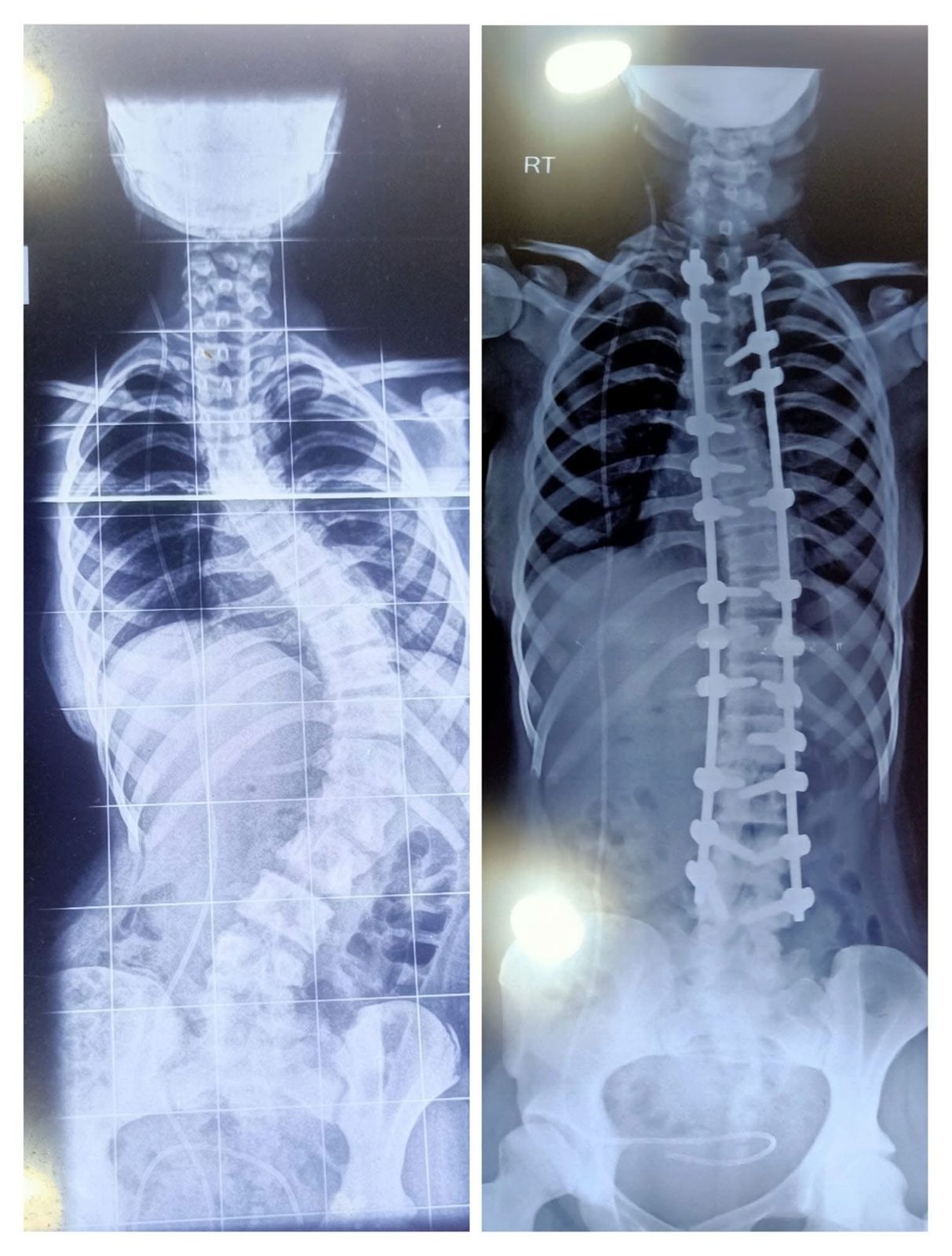
Tag: top spine surgeon in Visakhapatnam

  • Common Myths About Scoliosis – And the Truth

    Common Myths About Scoliosis – And the Truth

                                        Dr. B. LEELA PRASAD

                                        SPINE SURGEON 

                                        AMULYA HOSPITAL

    Common Myths About Scoliosis

    Myth 1: “Carrying heavy school bags/backpacks causes scoliosis.”

    Truth: Carrying heavy school bags may cause temporary back or shoulder pain, but it does not cause scoliosis.

    A heavy bag can strain muscles, but it will not permanently change the shape of the spine.

    Myth 2: “Scoliosis is caused by poor posture.”

    Truth: Poor posture does not cause scoliosis. Slouching may make asymmetry more noticeable, but it does not create a structural spinal curve.

    Myth 3: “Scoliosis only affects girls.”

    Truth: Both boys and girls can develop scoliosis. However, girls are more likely to have curves that progress and require treatment.

    Myth 4: “Scoliosis always causes visible deformity.”

    Truth: Many scoliosis curves are mild and barely noticeable. Possible signs include uneven shoulders, rib prominence, or waist asymmetry — but not everyone has obvious physical changes.

    Myth 5: “Scoliosis is painful.”

    Truth: Scoliosis in children and adolescents is usually painless. Pain is more common in adults with long-standing curves or degenerative changes, but many people with scoliosis live completely pain-free.

    Myth 6: “Scoliosis can be corrected by exercise and physiotherapy.”

    Truth: Exercise and physiotherapy improve strength, posture, and comfort — but they usually do not permanently straighten a structural curve.

    Specialized programs such as the Schroth method may help manage progression and improve symmetry, but they are not a guaranteed cure.

    Myth 7: “Braces cure scoliosis.”

    Truth: Bracing does not cure scoliosis. It helps prevent the curve from worsening while a child is still growing.

    Myth 8: “Everyone with scoliosis needs surgery.”

    Truth: Surgery is recommended only for severe or rapidly progressing curves. Most patients are either monitored regularly or treated with bracing.

    Myth 9: “If you need surgery, you’ll never be active again.”

    Truth: Most patients return to sports, dance, and everyday activities within a few months after surgery.

    Although procedures like Spinal fusion may reduce flexibility in the treated segments, patients are generally encouraged to remain active once healing is complete.

    Myth 10: “Females cannot have normal childbirth after scoliosis surgery.”

    Truth: Most women who undergo scoliosis correction surgery can conceive normally, carry pregnancy safely, and deliver vaginally.

    Scoliosis surgery does not affect the uterus, ovaries, or hormonal function, so fertility is typically unaffected.

    Myth 11: “Children stop growing taller after scoliosis correction surgery.”

    Truth: Children do not automatically stop growing after scoliosis surgery.

    Most procedures are performed near or after the adolescent growth spurt, when most spinal growth is already complete.

    Many children actually become taller immediately after surgery because the curved spine is straightened.

    Spinal fusion stops growth only in the fused segments. Growth of the unfused spine, legs, and the rest of the body continues until skeletal maturity.

    In very young children with early-onset scoliosis, surgeons may use growth-friendly techniques instead of full fusion to allow continued spinal growth.

    Myth 12: “Scoliosis surgery is very risky and often causes serious complications like paralysis.”

    Truth: Scoliosis correction is a complex procedure, but with modern techniques and intraoperative monitoring, it is considered safe when performed by experienced spine deformity surgeons.

    Serious complications such as paralysis are very rare.

    Myth 13: “Complex spine surgeries can only be done in major metropolitan cities.”

    Truth: In the past, scoliosis correction was largely concentrated in metropolitan centers due to the need for highly specialized surgeons, advanced ICUs, experienced anesthesia teams, and specialized instrumentation.

    Over the past 10–15 years, spine care has advanced significantly. Surgical expertise, modern technology, and advanced hospital infrastructure are now available in many Tier 2 cities.

    As a result, complex spine surgeries such as scoliosis correction can be safely and successfully performed in well-equipped centers—including cities like Visakhapatnam—provided the necessary expertise, technology, and multidisciplinary support are in place.

    For scoliosis treatment in Visakhapatnam, one needs to consult a top spine surgeon in Visakhapatnam. Visit Dr. B. Leela Prasad, one of the best scoliosis consultation specialists in Vizag. These are some common myths about scoliosis that people believe.
  • 10 FAQs Regarding Slip Disc Treatment.

    10 FAQs Regarding Slip Disc Treatment.

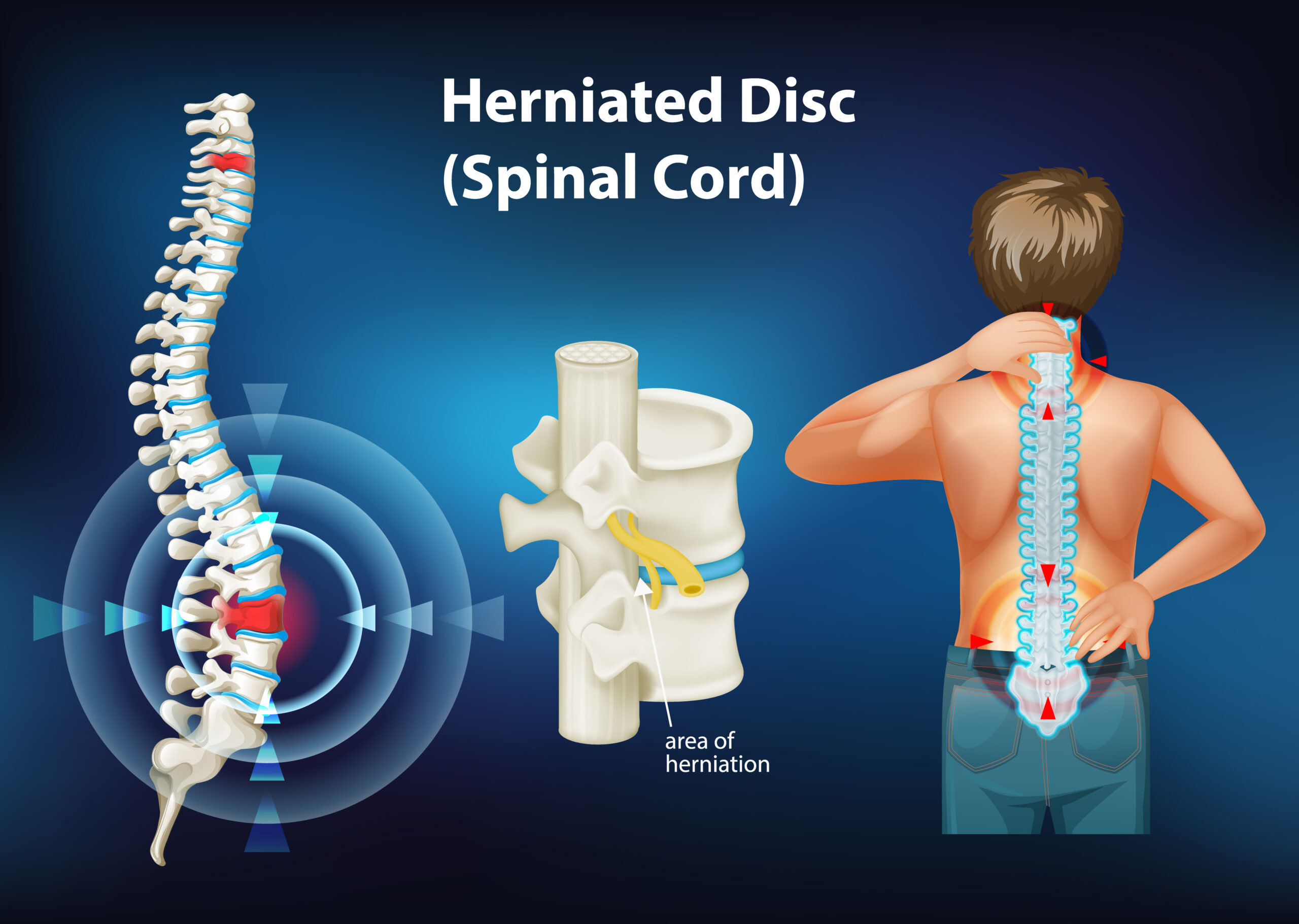
    1. What is a slipped disc?

    A slipped disc (also called a herniated or prolapsed disc) happens when the soft gel-like center (nucleus pulposus) of a spinal disc pushes out through a tear in the outer layer (annulus fibrosus). This can press on nearby nerves and cause pain, numbness, or weakness.  To get the best slip disc treatment, you need to consult a top spine specialist for better understanding.

    2. Does it occur only in the lower back?

    Slipped disc commonly occurs not only in the lower back (lumbar spine) but also in the neck (cervical spine) as well. It can rarely occur in the mid back (thoracic spine)


    3. What are the common symptoms?

    Symptoms depend on the level (cervical/thoracic/lumbar) of the disc prolapse. Common symptoms are:

    Lumbar (lower back) disc prolapse:

    • Lower back pain
    • Pain radiating down the leg (sciatica)
    • Numbness or tingling in legs
    • Muscle weakness

    Cervical (neck) disc prolapse:

    • Neck pain
    • Pain radiating to the shoulder/arm/forearm or hand.
    • Tingling or numbness in fingers
    • Weak grip strength

    4. Do all people with slipped discs have symptoms?

    No, many people with slipped discs do not have symptoms

    5. How is it diagnosed?

    • A slipped disc is suspected by a good clinical history and thorough physical examination of the patient and confirmed by an MRI scan.

    X-rays are done to rule out other problems and also help in surgical planning.

    6. Can a disc prolapse heal on its own?

    Yes. The symptoms of a slipped disc resolve within 4-6 weeks in more than 90% of patients.

    6. Are alternative systems of medicine (like Ayurveda, homeopathy, etc.) effective in treating slipped discs?

    As mentioned above, the symptoms of a slipped disc resolve within 4-6 weeks in more than 90% of patients irrespective of the treatment modality. This is the natural history of a slipped disc.

    7. What is the role of spinal injections in the treatment of slipped disc? Do they provide permanent relief?

    Spinal injections like selective nerve root blocks provide good pain relief and are generally indicated in patients not responding to medication or those with severe pain. 

    However, the duration of pain relief is highly unpredictable. It may vary from a few days to a few years. In some patients, the pain relief may be permanent.

    8. Do spinal injections have any serious side effects? Can they be repeated?

    Spinal injections are considered very safe; the incidence of side effects is very rare. They can be repeated if the pain recurs.

    9. How often is surgery required for patients with slipped discs?

    Surgery is required in less than 5% of patients. To know if surgery is necessary or not, you need to consult a top spine specialist for slip disc treatment.

    10. How soon can the patient get back to work after surgery for slipped disc

    With the advent of minimally invasive procedures like microdiscectomy and endoscopic discectomy, patients can get back to office jobs as early as a few days. 

    However, patients need to wait for a few weeks before getting back to heavy manual labor.

  • What is Cervical Myelopathy?

    What is Cervical Myelopathy?

    What is Cervical Myelopathy?

    Literally cervical myelopathy means dysfunction of the spinal cord in the cervical region  (neck) The dysfunction is due to compression of the spinal cord in the neck. This compression can result from various causes; the commonest being  age-related degenerative(wear & tear) changes, followed by disc herniations, spinal canal stenosis, spinal infections, tumors or injuries. 

    Cervical spondylotic myelopathy can affect anyone at any age, but it’s more common among males and  elderly. The average age of a diagnosis is 64. It is the most common type of non traumatic spinal cord dysfunction in patients older than 55 years

    It is one of  the most commonly missed & under diagnosed problems amongst the spine disorders. Diagnosis is often delayed, which can lead to poor outcomes. 

    A well-known Spine Specialist in Vizag, Dr. B. Leela Prasad is known for accurately diagnosing and treating complicated spine problems. He is one of the best Cervical Spine Specialists in Vizag and has helped many people with neck pain, spinal cord compression, and other connected problems. A lot of people have found relief and better mobility with his advanced Cervical Myelopathy Treatment in Vizag. This has made him one of the most trusted spine doctors in the area.

    Symptoms 

    In the early stages, patients may be having only very subtle symptoms  like  neck pain, feeling of heaviness and numbness in the legs and clumsiness of hands These are usually mistaken for ‘general weakness’ by patients and sometimes by doctors as well. As the disease progresses, the symptoms become more and more  obvious

    In the later stages,  slipping of footwear unknowingly , swaying while walking, feeling of tightness of legs, loss of balance on closing eyes, difficulty in climbing stairs and stepping into vehicles are the common symptoms in the legs. Patients will not be able to perform activities involving  fine motor skills and coordination of hands like buttoning  and unbuttoning shirts, operating  mobile phones, counting currency notes and change in hand writing. In the advanced stages, patients may be unable to walk without support, unable to firmly grasp objects in the hand.The hands become deformed and they may not be able to feed themselves, brush their teeth and clean themselves.

    Finally , the legs become paralysed and patients become bedridden; they may lose control  in passing urine and motion.

    How is cervical myelopathy diagnosed?

    Cervical myelopathy is difficult to diagnose in the early stages. Only  a thorough clinical history,  physical examination combined with appropriate investigation  will clinch the diagnosis. MRI scan of the spine shows the extent and severity of compression . CT scans and X-rays give additional information regarding the nature of compression and also help in planning the surgery.Nerve conduction studies may be done whenever the diagnosis is in doubt.

    Natural history Prognosis 

    The natural history varies from patient to patient.

    In about 20% of patients the symptoms may remain static or may progress very slowly over a period of time. In more than two thirds of patients symptoms worsen gradually over a period of months to years.In very few cases, patients may rapidly deteriorate, especially after a fall.

    Cervical myelopathy usually worsens gradually if left untreated. Severe cases may cause permanent, irreversible nerve damage, which can lead to complications like intense pain and paralysis of all limbs .

    Treatment

    Nonsurgical management

    Non-surgical treatment plays a very limited role in cervical myelopathy. Doctors manage mild disease without worsening or functional impairment non-surgically, but they observe and examine patients regularly for any signs of worsening.

    Nonsurgical options may include:

    Surgical treatment

    Doctors recommend surgery for all patients who experience functional impairment or worsening symptoms.

    The main aim of surgery is to prevent further worsening of patients’ symptoms. Patients usually recover gradually and slowly after surgery, and they may start noticing significant improvement after a few weeks to months. Results of surgery  depend on many factors : the duration and severity of symptoms, speed of worsening of symptoms, extent of the disease(number of levels involved ),nature of compression, age of the patient and associated comorbidities. 

    Young patients with single-level involvement achieve very good functional recovery when they undergo surgery in the early stages of the disease. In advanced stages, significant recovery may not occur even after surgery.

    Surgical procedure

    The recommended surgical procedure can vary based on the nature of compression(soft disc vs hard bone), extent of disease( number of levels involved), alignment of cervical spine , age and general health  of the patient. It may include one or a combination of the following:

    How can you prevent cervical myelopathy?

    As mentioned earlier, cervical myelopathy is commonly due to degenerative changes, trauma , tumors and spinal infections, all of which are not preventable.

    Early diagnosis and surgery are key to good results 

    Why Choose Dr. Leela Prasad for Cervical Myelopathy Treatment in Vizag?

    When you choose Dr. B. Leela Prasad for Cervical Myelopathy Treatment in Vizag, you entrust your spine health to a highly respected and experienced professional in the area. As a top spine surgeon in Visakhapatnam, Dr. Leela Prasad uses cutting-edge diagnostic tools. He uses custom treatment plans for each patient to make sure they get better and stay healthy in the long run.

    Expertise in Cervical Spine Treatment in Vizag based on years of successful surgeries. Especially when it comes to treating complicated cervical spine disorders. While Dr. B. Leela Prasad focuses on patient safety, minimally invasive methods, and compassionate care. H is still the first choice for people in Vizag who want specialised treatment for cervical myelopathy and other spine-related problems.