Tag: Cervical Spine Treatment in Vizag

  • Unusual presentation of Cervical Myelopathy – A Journey from Wheelchair to Recovery

    Unusual presentation of Cervical Myelopathy – A Journey from Wheelchair to Recovery

    Even a specialist doctor cannot choose the patients coming to him. Patients with symptoms totally unrelated to the speciality may visit the doctor with a lot of confidence and  hope. In this context , let me narrate an interesting case.

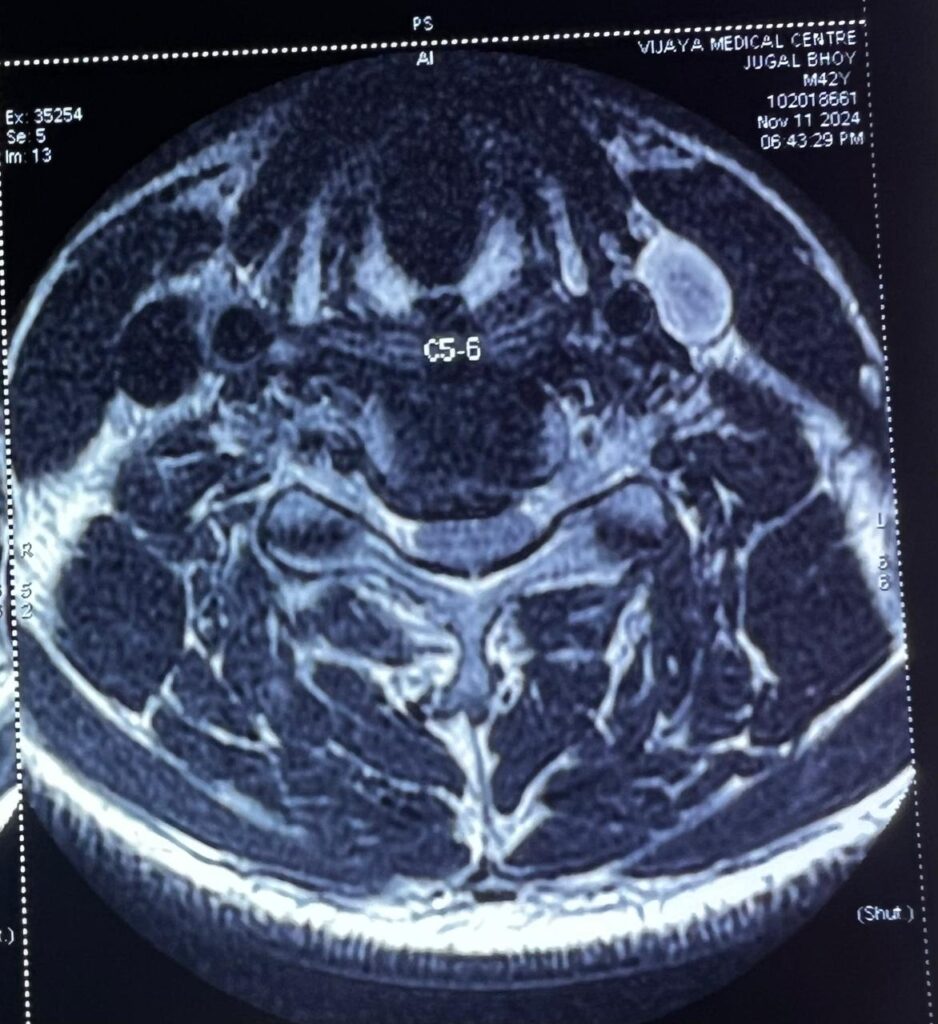
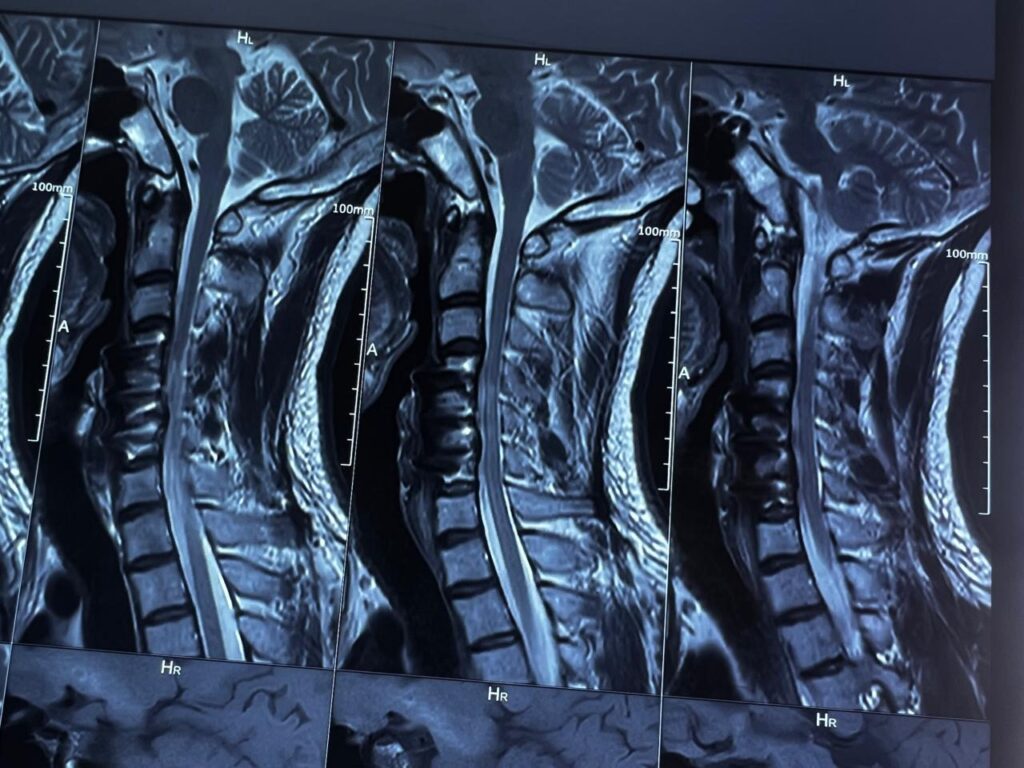
    A 40yr old gentleman from a neighbouring state came down with paralysis of the right upper and lower limbs. His symptoms were worsening  rapidly and he became wheelchair bound within a few days.  As paralysis of one half of the body is very typical of a brain stroke, I was wondering why he came to me;  and asked him to consult a neurophysician. He told me he had already consulted a neurophysician in his home town and he had no relief. MRI of the brain was already done; it was normal. After careful clinical examination, I suspected a problem in the cervical spine and asked for an  MRI scan of that region. 
                        

    Diagnosis and Surgical Decision-

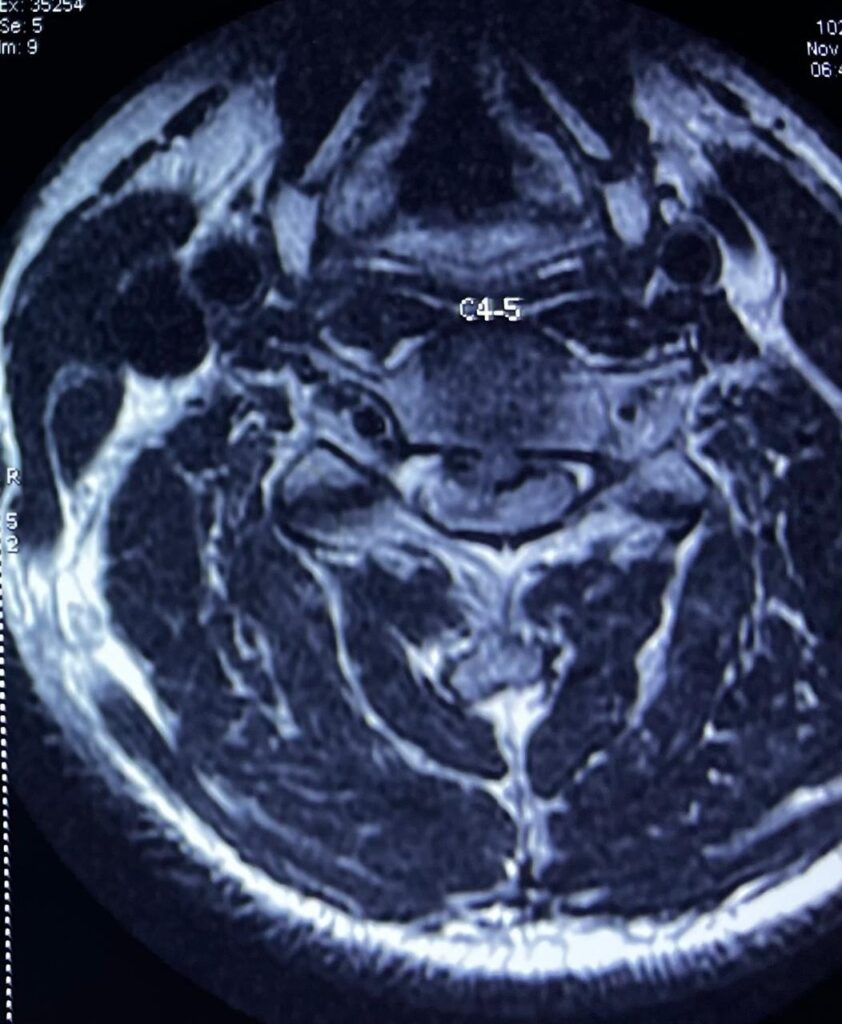
    The scan showed disc prolapse at the C4-5 and C5-6 levels, with severe compression of the spinal cord. The paralysis of his right hand and leg was due to this compression. A diagnosis  Cervical Myelopathy was made  , and as the patient was rapidly deteriorating, surgery was advised. The patient was taken  up for surgery after a detailed  discussion  with his family regarding the risks, benefits and possible outcomes. Surgery (Anterior Cervical Discectomy and Fusion (ACDF) was done  at C4-5 and C5-6 levels.

    The surgery involved approaching the spine from front(anterior), removing the discs at C4-5 & C5-6(discectomy), thereby  relieving the pressure on spinal cord and placing bone graft in the empty disc spaces(fusion) and fixing them with a titanium plate and  screws.

    Cervical Spine Treatment Before

    Postoperative Recovery and Progress –

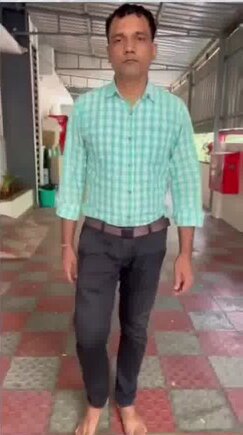
    Surgery was uneventful. He started showing signs of improvement almost immediately after the surgery; he was discharged within 3 days. The patient made steady progress and started to walk with support in a few weeks time. 

    After 9 months, follow-up X-rays and MRI scans showed good decompression    of the spinal cord and fusion  at both the C4-5 and C5-6 levels. His paralysis recovered completely, he is able to walk, squat and get up without any support. He is back to his work and is  even  able to do what he liked most: biking. 
    Cervical Spine Treatment After

    This case underlines the importance of meticulous examination of every patient to make a correct diagnosis 

    Understanding Cervical Myelopathy-

     Cervical myelopathy is a disorder due to physical  compression of the spinal cord  in the cervical region  (neck). This compression can result from various causes; the commonest being  age-related degenerative(wear & tear) changes, followed by disc herniations, spinal canal stenosis, spinal infections, tumors or injuries. 

    Though cervical myelopathy can affect anyone at any age, it’s more common among males and  elderly. 

    Symptoms of cervical myelopathy

    In the early stages, symptoms are  very subtle,  like  neck pain, feeling of heaviness and numbness in the legs and clumsiness of hands These are usually mistaken for ‘general weakness’ by patients and sometimes by doctors as well. 

    In the later stages,  slipping of footwear unknowingly , swaying while walking, feeling of tightness of legs, loss of balance on closing eyes, difficulty in climbing stairs and stepping into vehicles are the common symptoms in the legs. Patients will not be able to perform activities involving  fine motor skills and coordination of hands like buttoning  and unbuttoning shirts, operating  mobile phones, counting currency notes and writing.

     In the advanced stages, patients may be unable to walk without support, unable to firmly grasp objects in the hand.The hands become deformed and they may not be able to feed themselves, brush their teeth and clean themselves.

    Finally , the legs become paralysed and patients become bedridden; they may lose control  in passing urine and motion.

    Why is early diagnosis intervention critical?

    Delay in diagnosis allows the disease to progress; the neural tissues of the spinal cord may be permanently damaged. 

    Early diagnosis and intervention at the appropriate time is crucial for good functional recovery. Surgery in advanced stages only gives poor results
    FAQ’s:

    Q1) What is Cervical Myelopathy, and what causes it?

     Cervical myelopathy is dysfunction of the spinal cord in the cervical region( neck).

    Compression of the spinal cord in the neck area, commonly caused by disc prolapse, bone spurs, or spinal degeneration,results  in cervical myelopathy.

    Q2) How is Cervical Myelopathy diagnosed?

    Cervical myelopathy is difficult to diagnose in the early stages. Only  a thorough clinical history,  physical examination combined with appropriate investigation  will clinch the diagnosis. MRI scan of the spine shows the extent and severity of compression . CT scans and X-rays give additional information regarding the nature of compression and also help in planning the surgery.

    Q3) What is the best way to treat cervical myelopathy?

     Mild disease without any worsening or functional impairment  can be   managed non surgically. How ever they should be observed and examined at regular intervals for worsening. Nonsurgical options may include 

    surgery is recommended for all patients with functional impairment or worsening symptoms.

    Q4) After surgery on the cervical spine, how long does it take to get better?

    Recovery largely depends on the stage of the disease at the time of surgery.. If operated early , most patients can go back to work within a few weeks. Recovery also depends on the  age of the patient , the number of levels involved, severity and nature of compression.

    Q5) Why choose Amulya Hospital for Cervical Spine Surgery in Vizag?

    Our state of the art  facilities, cutting edge technology, and compassionate  care  create a warm and welcoming atmosphere. Our team of passionate and highly skilled doctors led by Dr B. Leela Prasad is dedicated to providing personalised attention and expert care. 

  • What is Cervical Myelopathy?

    What is Cervical Myelopathy?

    What is Cervical Myelopathy?

    Literally cervical myelopathy means dysfunction of the spinal cord in the cervical region  (neck) The dysfunction is due to compression of the spinal cord in the neck. This compression can result from various causes; the commonest being  age-related degenerative(wear & tear) changes, followed by disc herniations, spinal canal stenosis, spinal infections, tumors or injuries. 

    Cervical spondylotic myelopathy can affect anyone at any age, but it’s more common among males and  elderly. The average age of a diagnosis is 64. It is the most common type of non traumatic spinal cord dysfunction in patients older than 55 years

    It is one of  the most commonly missed & under diagnosed problems amongst the spine disorders. Diagnosis is often delayed, which can lead to poor outcomes. 

    A well-known Spine Specialist in Vizag, Dr. B. Leela Prasad is known for accurately diagnosing and treating complicated spine problems. He is one of the best Cervical Spine Specialists in Vizag and has helped many people with neck pain, spinal cord compression, and other connected problems. A lot of people have found relief and better mobility with his advanced Cervical Myelopathy Treatment in Vizag. This has made him one of the most trusted spine doctors in the area.

    Symptoms 

    In the early stages, patients may be having only very subtle symptoms  like  neck pain, feeling of heaviness and numbness in the legs and clumsiness of hands These are usually mistaken for ‘general weakness’ by patients and sometimes by doctors as well. As the disease progresses, the symptoms become more and more  obvious

    In the later stages,  slipping of footwear unknowingly , swaying while walking, feeling of tightness of legs, loss of balance on closing eyes, difficulty in climbing stairs and stepping into vehicles are the common symptoms in the legs. Patients will not be able to perform activities involving  fine motor skills and coordination of hands like buttoning  and unbuttoning shirts, operating  mobile phones, counting currency notes and change in hand writing. In the advanced stages, patients may be unable to walk without support, unable to firmly grasp objects in the hand.The hands become deformed and they may not be able to feed themselves, brush their teeth and clean themselves.

    Finally , the legs become paralysed and patients become bedridden; they may lose control  in passing urine and motion.

    How is cervical myelopathy diagnosed?

    Cervical myelopathy is difficult to diagnose in the early stages. Only  a thorough clinical history,  physical examination combined with appropriate investigation  will clinch the diagnosis. MRI scan of the spine shows the extent and severity of compression . CT scans and X-rays give additional information regarding the nature of compression and also help in planning the surgery.Nerve conduction studies may be done whenever the diagnosis is in doubt.

    Natural history Prognosis 

    The natural history varies from patient to patient.

    In about 20% of patients the symptoms may remain static or may progress very slowly over a period of time. In more than two thirds of patients symptoms worsen gradually over a period of months to years.In very few cases, patients may rapidly deteriorate, especially after a fall.

    Cervical myelopathy usually worsens gradually if left untreated. Severe cases may cause permanent, irreversible nerve damage, which can lead to complications like intense pain and paralysis of all limbs .

    Treatment

    Nonsurgical management

    Non-surgical treatment plays a very limited role in cervical myelopathy. Doctors manage mild disease without worsening or functional impairment non-surgically, but they observe and examine patients regularly for any signs of worsening.

    Nonsurgical options may include:

    Surgical treatment

    Doctors recommend surgery for all patients who experience functional impairment or worsening symptoms.

    The main aim of surgery is to prevent further worsening of patients’ symptoms. Patients usually recover gradually and slowly after surgery, and they may start noticing significant improvement after a few weeks to months. Results of surgery  depend on many factors : the duration and severity of symptoms, speed of worsening of symptoms, extent of the disease(number of levels involved ),nature of compression, age of the patient and associated comorbidities. 

    Young patients with single-level involvement achieve very good functional recovery when they undergo surgery in the early stages of the disease. In advanced stages, significant recovery may not occur even after surgery.

    Surgical procedure

    The recommended surgical procedure can vary based on the nature of compression(soft disc vs hard bone), extent of disease( number of levels involved), alignment of cervical spine , age and general health  of the patient. It may include one or a combination of the following:

    How can you prevent cervical myelopathy?

    As mentioned earlier, cervical myelopathy is commonly due to degenerative changes, trauma , tumors and spinal infections, all of which are not preventable.

    Early diagnosis and surgery are key to good results 

    Why Choose Dr. Leela Prasad for Cervical Myelopathy Treatment in Vizag?

    When you choose Dr. B. Leela Prasad for Cervical Myelopathy Treatment in Vizag, you entrust your spine health to a highly respected and experienced professional in the area. As a top spine surgeon in Visakhapatnam, Dr. Leela Prasad uses cutting-edge diagnostic tools. He uses custom treatment plans for each patient to make sure they get better and stay healthy in the long run.

    Expertise in Cervical Spine Treatment in Vizag based on years of successful surgeries. Especially when it comes to treating complicated cervical spine disorders. While Dr. B. Leela Prasad focuses on patient safety, minimally invasive methods, and compassionate care. H is still the first choice for people in Vizag who want specialised treatment for cervical myelopathy and other spine-related problems.