Category: Spinal Tuberculosis

  • 10 FAQs regarding TB Spine

    10 FAQs regarding TB Spine


    Q1. Many people think TB affects only the lungs. Does it really affect the spine?

    Though TB commonly affects the lungs, it can also affect bones and joints (called skeletal tuberculosis).
    In fact, the spine is the most common site of bone TB. Get the best tuberculosis spine treatment in Vizag from Dr. B. Leela Prasad.


    Q2. Can healthy people get TB spine? Or does it affect only poor or malnourished people?

    Anyone can get TB spine—young or old, healthy or sick, educated or not, well-nourished or undernourished.

    TB spine is a medical condition—not a reflection of lifestyle, hygiene, education, or social status.

    However, the risk is higher in:

    • People with diabetes
    • Patients with HIV
    • Patients on long-term steroids/chemotherapy/immune-suppressive medications

    Q3. Does TB spine spread by sharing food or close contact with a patient?

    No. TB spine is not contagious. It does not spread from person to person.

    Only lung TB (pulmonary TB) spreads through air when an infected person coughs. Spinal TB itself does not spread.


    Q4. Does TB spine always cause fever, cough, weight loss, and loss of appetite?

    • Fever, weight loss, and loss of appetite may be present in some patients — but not all.
    • Cough is present only in patients with lung TB.

    Patients with TB spine do not have cough unless they also have lung TB.


    Q5. How is back pain due to TB spine different from routine back pain?

    Back pain due to TB spine is often more severe, persistent, progressive and  worse at night.. Unlike routine back pain it doesn’t improve with rest or painkillers.


    Q6. Does TB spine always need surgery, or can it be treated with medication?

    TB spine is primarily a medical disease and can be cured with proper anti-TB medication alone.

    Surgery is needed only in selected cases, such as:

    • Weakness or paralysis due to nerve compression
    • Severe or worsening deformity (hump)
    • Spinal instability
    • Large abscess
    • No improvement despite proper medication

    Most patients recover without surgery. For more information about the treatment, it is recommended to consult the best spine specialist near me.


    Q7. Does TB spine cause paralysis? If yes, does it recover?

    Paralysis is uncommon and usually occurs when:

    • Diagnosis is delayed
    • Treatment is inadequate

    If treated early, paralysis often recovers well.
    However, if treatment or surgery is delayed, recovery may be incomplete.

    Early diagnosis is key.


    Q8. Are anti-TB drugs safe? Do they have serious side effects?

    Anti-TB drugs are very effective and safe for most patients.

    However,  they can cause serious side effects in a small number of patients. Treatment should therefore always be administered under close medical supervision.

    Never stop medicines without consulting your doctor.


    Q9. How long should a patient take anti-TB medication? What happens if treatment is stopped midway?

    Patients with TB spine usually need anti-TB treatment for at least 9 months, depending on medical advice.

    Stopping medication early or taking it irregularly can:

    • Cause recurrence of the disease
    • Lead to drug resistance
    • Make treatment more difficult

    Complete the full course, even if symptoms improve. Always get the best consultation from an expert spine surgeon.


    Q10. Does everyone with TB spine develop a hump? Can it be corrected?

    No. Not everyone develops a hump (spinal deformity).

    Deformity usually occurs in:

    • Late diagnosis
    • Inadequate treatment
    • Extensive disease

    Early treatment can prevent or minimize deformity.

    If deformity develops, it can be corrected with surgery.
  • Spinal Tuberculosis Treatment in Vizag

    Spinal Tuberculosis Treatment in Vizag

    Despite what most people think, Spinal tuberculosis (TB) does not only affect the lungs. The most common type of TB is lung TB, but the infection can spread to almost any organ in the body, even the spine. Someone once said, “Tuberculosis can cause anything except pregnancy.” Consult the top doctors for the best spine tuberculosis treatment in Vizag.

    Spinal Tuberculosis most often affects the lungs, but it can also happen in the spine. Pott’s disease, which is another name for spinal tuberculosis, happens when TB germs that have been dormant in the body since childhood come back to life. If this condition isn’t treated, it can lead to extreme pain, spinal deformities, and even paralysis.

    It is imperative to see a Spine Specialist in Vizag if you or someone you care about is having constant back pain. Dr. Leela Prasad at Amulya Hospital provides the best spine tuberculosis treatment in Vizag, assisting patients regain their independence and pain-free living.

    Getting to Know Spinal Tuberculosis 

    Contrary to popular belief, tuberculosis (TB) is not limited to the lungs; it can affect almost any organ in the body. As the saying goes, “Tuberculosis can cause anything except pregnancy.”

    After the lungs, the spine is one of the most commonly affected sites. Spinal tuberculosis, also known as Pott’s disease, typically develops when dormant TB bacteria, present since childhood, become reactivated.

    If left untreated, spinal TB can lead to severe complications. Early diagnosis and timely treatment are essential to prevent long-term damage and ensure optimal recovery.

    Symptoms of Spinal Tuberculosis

    Back pain associated with spinal TB is typically deep-seated and persists even at rest. It often worsens at night and, if left untreated, gradually intensifies over time. In severe cases, the pain can become so debilitating that it confines the patient to bed. The discomfort may be localized to the back or radiate to the limbs.

    The mid-back region, specifically the dorso-lumbar junction, is the most common site of spinal tuberculosis. One of the most prevalent symptoms is persistent back discomfort, which is characterised by:

    • Noticible during the night
    • Getting stronger over time
    • Might worsen to the point where the sufferer can’t leave their bed

    Additional symptoms:

    • Night sweats and unexplained fever
    • Fatigue and losing weight
    • Back pain, stiffness, and limited range of motion
    • Swelling or deformity in the affected area

    Possible Side Effects of Spinal Tuberculosis

    Neglected cases of tuberculosis in the spinal cord can cause serious, even fatal, consequences, such as:

    Bone Destruction

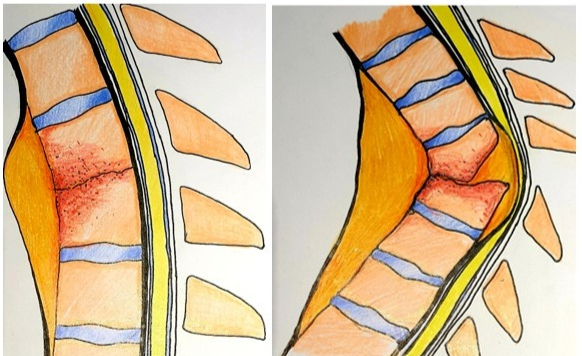
    The TB bacteria loosen the vertebrae over time, which makes the spinal column less strong. This damage can cause breaks and abnormalities, so it’s important to find the problem quickly.

    Building up of pus and nerve compression

    As the infection gets worse, pus builds up in the spine, which presses on spinal nerves. This could lead to:

    • Bad leg pain
    • Legs that feel numb or tingly
    • Lower limb weakness

    Spinal Cord Compression and Paralysis

    If the pus or broken bone puts a lot of pressure on the spinal cord, the person may experience:

    • Partial or complete paralysis
    • Loss of bladder and bowel control

    Kyphotic Deformity (Hunchback)

    The destruction of bone by tuberculosis bacteria can cause vertebral collapse, leading to a hunchback-like deformity known as kyphosis. A strong forward bend (kyphosis) in the spine can happen when several vertebrae break. In severe cases, a kyphotic condition that lasts for a long time can cause permanent paralysis.

    Diagnosis of Spinal Tuberculosis

    Dr. Leela Prasad, an expert in spinal tuberculosis treatment in Vizag specializes in minimally invasive surgeries to restore mobility and function.

    Diagnostic Tests for Spinal Tuberculosis Treatment

    Complete Blood Count (CBC), ESR, and CRP:

    These tests help evaluate signs of infection and inflammation in the body.

    X-rays:

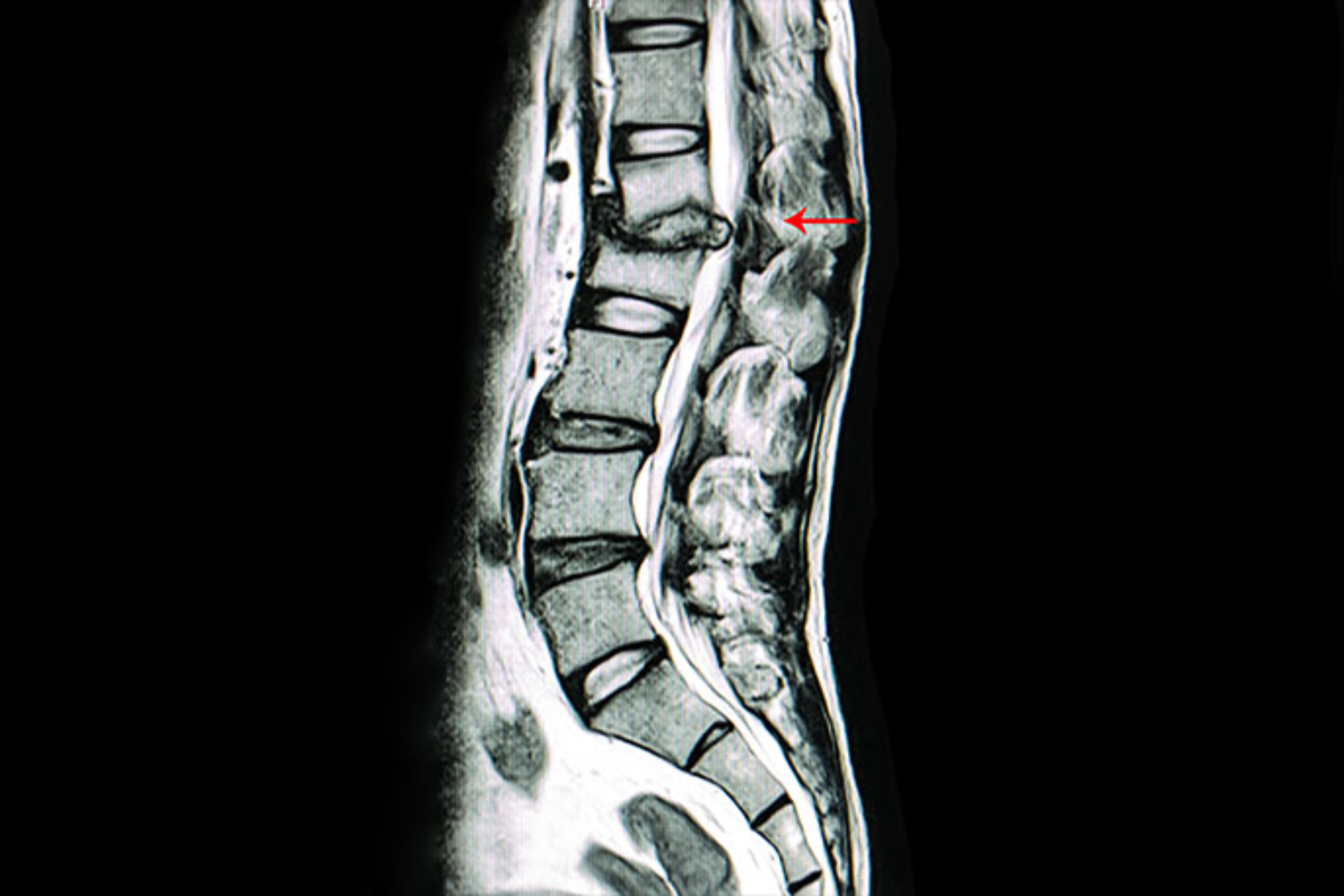
    In the early stages of spinal TB, X-rays may appear normal, making diagnosis challenging. Characteristic changes become visible only after significant bone destruction has occurred.

    Magnetic Resonance Imaging (MRI):

    MRI is highly sensitive in detecting spinal disorders and can identify spinal TB at an early stage, even before X-rays or CT scans reveal any abnormalities. It provides a detailed view of the extent of the disease, detects pus collections, and assesses spinal cord compression.

    Biopsy:

    A tissue sample from the affected bone is examined under a microscope to confirm the presence of spinal TB.

    A combination of these diagnostic tests is often required for an accurate diagnosis of spinal tuberculosis.

    Treatment for Spine Tuberculosis Treatment in Vizag

    Tuberculosis of the spine, or any organ, is a medical condition that can be successfully treated with medicine.

    Medical Management

    Anti-tubercular therapy (ATT) consists of a combination of 4 drugs (isoniazid, rifampicin, pyrazinamide, ethambutol), which should be taken for a period of 9-12 months.

    Supportive care: Rest, analgesics, and spinal bracing to reduce pain and prevent deformity.

    Surgical Management

    • Indications: severe pain not responding to medication, Significant kyphosis, weakness and paralysis of limbs, failed medical management,
    • Surgical procedures: Debridement( removal of dead bone), decompression( relieving the pressure on spinal cord),  instrumentation (supporting the spine with screws rods), bone grafting and fusion.
    • Goals: To relieve pressure on the spinal cord, stabilize the spine, and prevent further deformity.

    Recovery and Rehabilitation

    To get better from spinal TB, you need long-term medicine, physical therapy, and changes to your lifestyle. Patients are told to:

    •  Physical therapy: To improve mobility, strength, and flexibility.
    • Pain management: To control pain and discomfort.
    • Spinal orthotics: To provide support and stability.

    Monitoring and Follow-up

    • Regular check-ups: To monitor treatment response, spinal stability, and neurological function.
    • Imaging studies: To assess spinal alignment, bone healing, and disease progression.

    For the best care of TB spine, a team effort combining orthopaedic surgeons, spine surgeons, infectious disease specialists, and rehabilitation experts is needed. 

    Spine Tuberculosis Treatment in Vizag

    Dr. Leela Prasad, an expert in spinal tuberculosis treatment in Vizag, specializes in minimally invasive spinal surgeries to restore mobility and function.

    Final Thoughts:

    Spinal tuberculosis is a dangerous disease that needs to be found and treated quickly to avoid complications that can change a person’s life. If you or someone you care about has constant back pain, numbness, or weakness, talk to Dr. Leela Prasad, the best spine specialist in Visakhapatnam. With expert care and cutting-edge treatment choices, you can beat spinal TB and regain your quality of life.