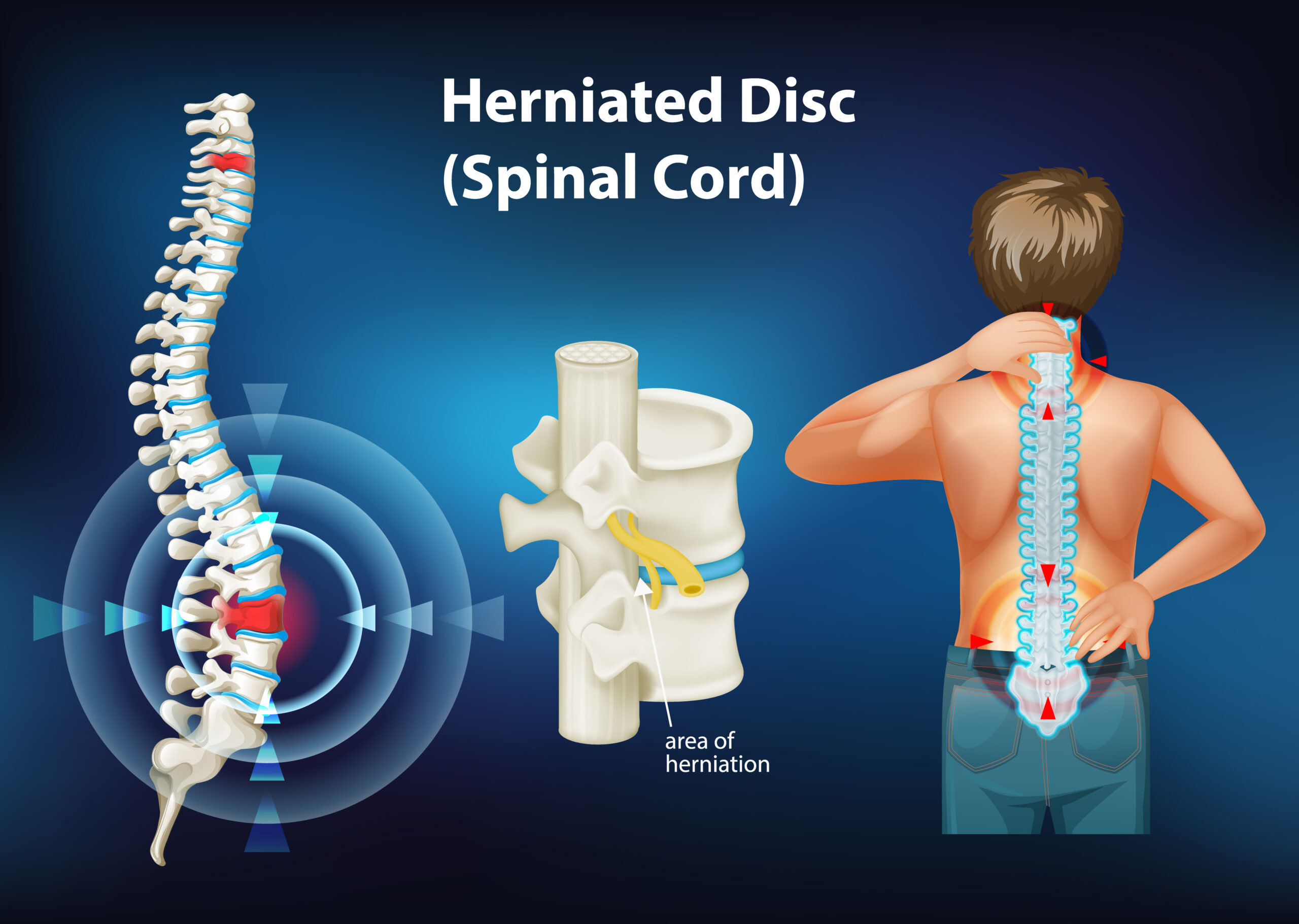
1. What is a slipped disc?
A slipped disc (also called a herniated or prolapsed disc) happens when the soft gel-like center (nucleus pulposus) of a spinal disc pushes out through a tear in the outer layer (annulus fibrosus). This can press on nearby nerves and cause pain, numbness, or weakness. To get the best slip disc treatment, you need to consult a top spine specialist for better understanding.
2. Does it occur only in the lower back?
Slipped disc commonly occurs not only in the lower back (lumbar spine) but also in the neck (cervical spine) as well. It can rarely occur in the mid back (thoracic spine)
3. What are the common symptoms?
Symptoms depend on the level (cervical/thoracic/lumbar) of the disc prolapse. Common symptoms are:
Lumbar (lower back) disc prolapse:
- Lower back pain
- Pain radiating down the leg (sciatica)
- Numbness or tingling in legs
- Muscle weakness
Cervical (neck) disc prolapse:
- Neck pain
- Pain radiating to the shoulder/arm/forearm or hand.
- Tingling or numbness in fingers
- Weak grip strength
4. Do all people with slipped discs have symptoms?
No, many people with slipped discs do not have symptoms.
5. How is it diagnosed?
- A slipped disc is suspected by a good clinical history and thorough physical examination of the patient and confirmed by an MRI scan.
X-rays are done to rule out other problems and also help in surgical planning.
6. Can a disc prolapse heal on its own?
Yes. The symptoms of a slipped disc resolve within 4-6 weeks in more than 90% of patients.
6. Are alternative systems of medicine (like Ayurveda, homeopathy, etc.) effective in treating slipped discs?
As mentioned above, the symptoms of a slipped disc resolve within 4-6 weeks in more than 90% of patients irrespective of the treatment modality. This is the natural history of a slipped disc.
7. What is the role of spinal injections in the treatment of slipped disc? Do they provide permanent relief?
Spinal injections like selective nerve root blocks provide good pain relief and are generally indicated in patients not responding to medication or those with severe pain.
However, the duration of pain relief is highly unpredictable. It may vary from a few days to a few years. In some patients, the pain relief may be permanent.
8. Do spinal injections have any serious side effects? Can they be repeated?
Spinal injections are considered very safe; the incidence of side effects is very rare. They can be repeated if the pain recurs.
9. How often is surgery required for patients with slipped discs?
Surgery is required in less than 5% of patients. To know if surgery is necessary or not, you need to consult a top spine specialist for slip disc treatment.
10. How soon can the patient get back to work after surgery for slipped disc
With the advent of minimally invasive procedures like microdiscectomy and endoscopic discectomy, patients can get back to office jobs as early as a few days.
However, patients need to wait for a few weeks before getting back to heavy manual labor.